You've got a serum, a toner, a day cream — and maybe a facial oil too. But in which order do you actually apply it all? If you've ever asked yourself this question, you're not alone. Skincare layering — deliberately stacking your care products in the right order — is one of the most common stumbling blocks in a daily routine. The good news: the basic rule is simple. And once you understand it, you'll get a lot more out of your products.
In this guide, you'll learn why the order really matters, which textures build on each other, and which typical mistakes you can skip from today onwards.
Why the order of your skincare matters so much
Skincare isn't random — and the order isn't a minor detail. Every product has a specific texture and molecule size. If you apply a rich cream before a watery serum, the serum can no longer get through the skin barrier. The active ingredients stay on the surface instead of working where they're actually needed.
The principle behind it is surprisingly simple: thin to thick, watery to oily. Light, watery textures go on first — they absorb quickly and carry active ingredients like Niacinamide or retinol into the deeper layers of the skin. Richer products follow afterwards and seal in the moisture.
Sounds logical? It is. Still, many women get it wrong without realising — not out of a lack of knowledge, but because their bathroom shelf has grown over time and nobody hands out an instruction manual.
The golden layering order: step by step
Here's the order that works for most skin types and routines — morning and evening, with small adjustments:
Step 1: Cleansing
Every good routine starts with clean skin. In the morning, a mild cleanse with water or a gentle wash gel is usually enough. In the evening, remove make-up, sunscreen and sebum more thoroughly — ideally with a double cleanse (oil cleanser + wash gel).
Step 2: Toner
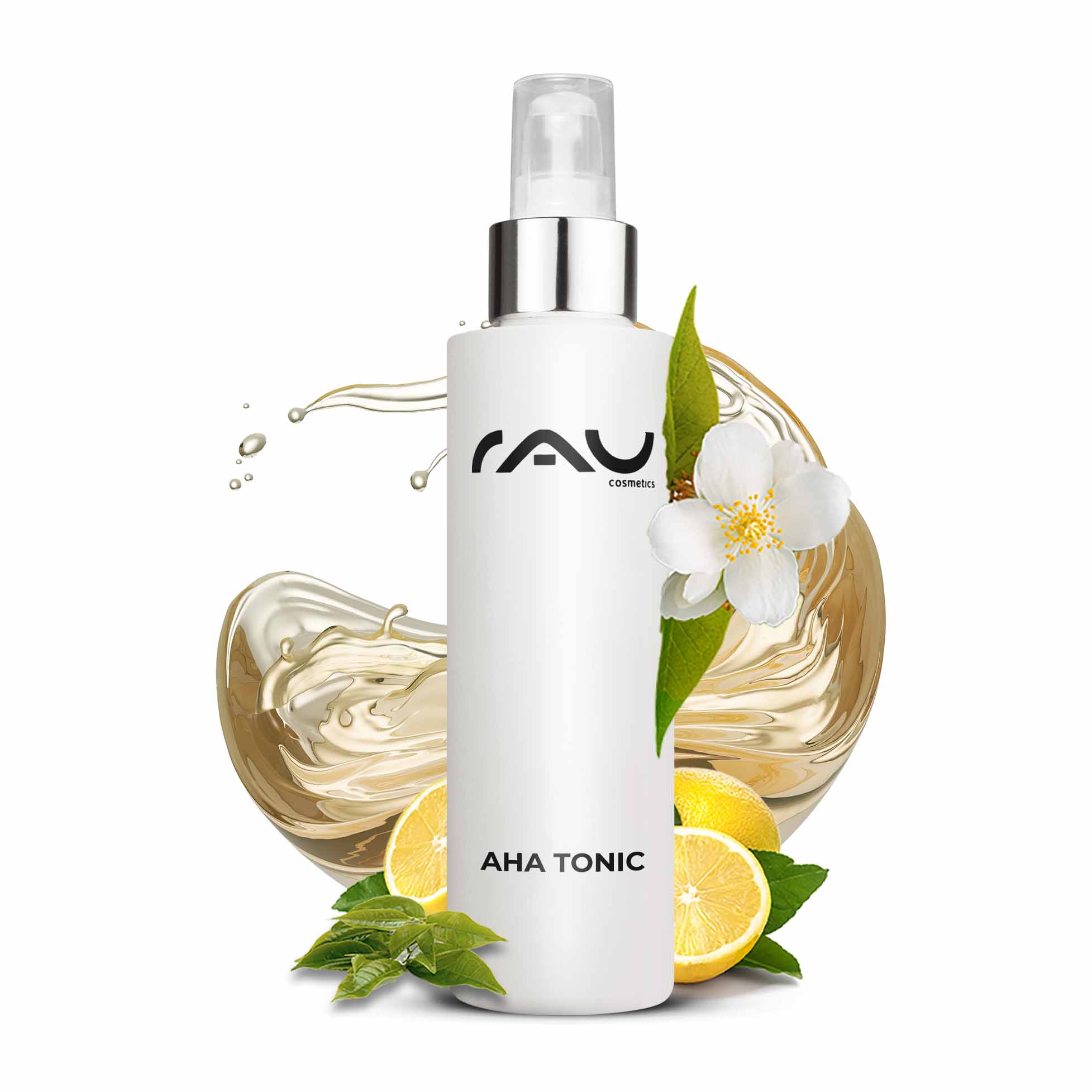
After cleansing, skin is slightly alkaline. A toner restores the pH balance and preps the skin for the active ingredients that follow. Products with mild fruit acids — like the AHA Toner — also help remove dead skin cells and refine the complexion. Apply the toner to a cotton pad and gently sweep it over the face.
Step 3: Serum (the active-ingredient booster)
The serum is the heart of your routine. It contains the highest concentration of active ingredients in a light, fast-absorbing form. Depending on your skin's needs, you might choose:
- Hyaluronic acid for moisture — such as our Hyaluronic Plump & Glow Serum, which works with several different molecule sizes
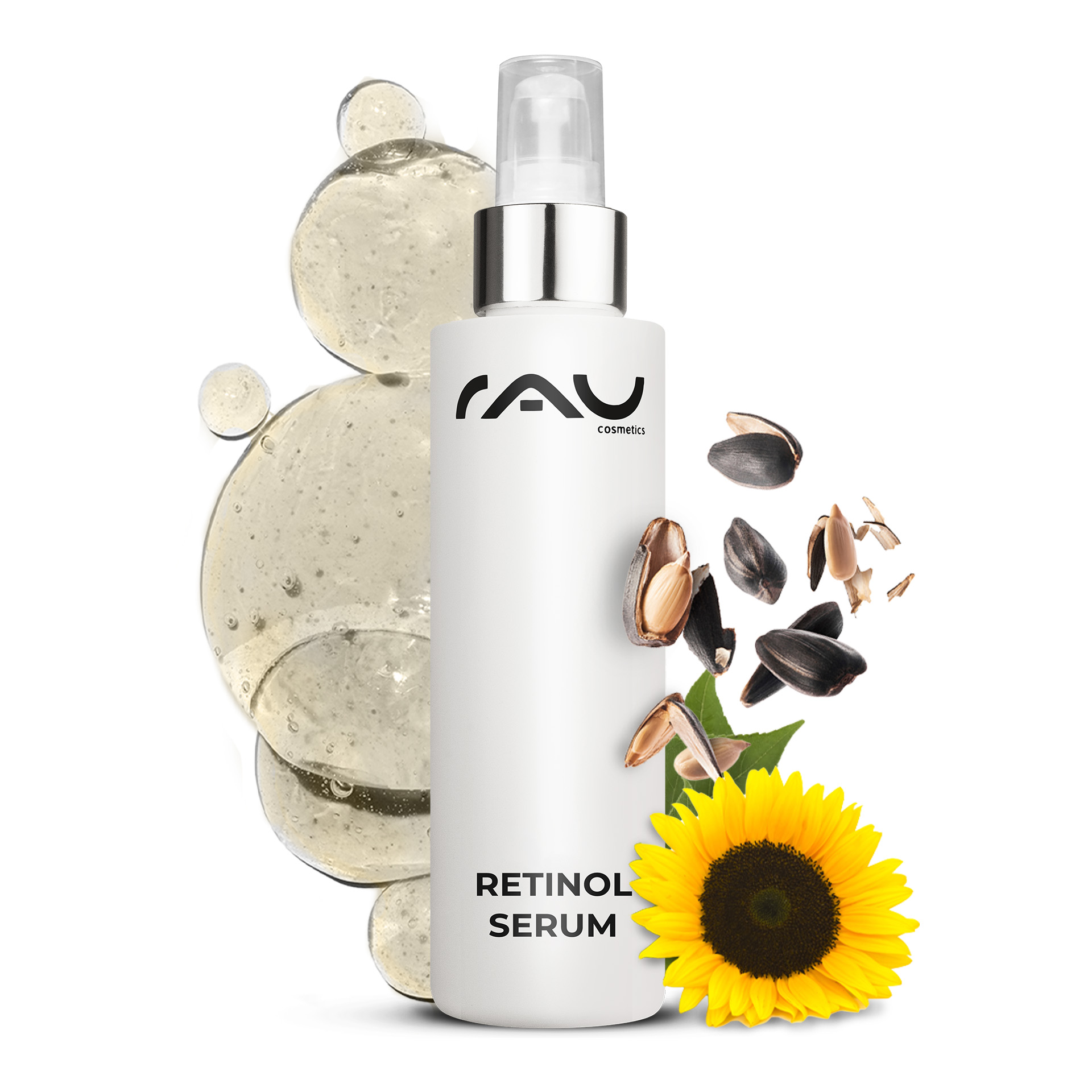
- Retinol for cell renewal — our Retinol Serum is especially suited to an evening routine
- Niacinamide for pores and pigmentation marks
Important: Apply the serum to skin that's still slightly damp (after the toner). This helps the active ingredients absorb better. Two to three drops are enough — pat in gently, don't rub.
Step 4: Eye care (optional)
If you use an eye cream, it goes on after the serum. The skin around the eyes is thinner and more sensitive — it needs its own, gentler formulas. Pat it in gently with your ring finger.
Step 5: Cream or gel (the seal)
Your day cream or gel locks in everything you've applied before it. For daytime, a lighter texture works well — like the Bakuchiol Sensitive Day Cream, which works with the plant-based retinol alternative bakuchiol. In the evening, it can be richer: the Golden Hyaluron Gel with 23-karat gold can help support moisture levels overnight.
Step 6: Sunscreen (morning — essential!)
In the morning, sunscreen is always the last step of your routine — no exceptions. Even in spring, even under cloudy skies. UV exposure is the main cause of premature skin ageing. Sunscreen goes on after your day cream and before make-up.
Step 7: Facial oil (evening — optional)
If you use a facial oil, it comes right at the end — after the cream. Oils form a film on the skin that helps prevent moisture from evaporating, which can feel especially good for dry skin during the colder months. Rule of thumb: oil always goes OVER the cream, never underneath — otherwise it can block the absorption of water-based active ingredients.
Common layering mistakes to avoid
Even with the best product line-up, you can make mistakes that reduce the effect. Here are the most common ones:
Mistake 1: Introducing too many products at once. Your skin needs time to get used to new active ingredients. Introduce a maximum of one new product per week — that way you can also tell what's working for you and what isn't.
Mistake 2: Applying serum to dry skin. Hyaluronic acid serums need moisture to work. On bone-dry skin, they can even draw water out of the deeper skin layers instead. So always apply serums to slightly damp skin — right after the toner.
Mistake 3: Using oil before cream. Oil forms an occlusive film. If you apply it before your cream, the cream can no longer absorb. Always stick to the order: watery before oily.
Mistake 4: Mixing active ingredients that don't get along. Not every active ingredient belongs in the same routine. Vitamin C and retinol can weaken each other or irritate the skin. The solution: vitamin C in the morning, retinol in the evening. You can read more on this in our guide AHA vs. BHA: Which Acid Really Suits Your Skin?.
Mistake 5: Skipping sunscreen. If you use retinol or fruit acids, your skin's sensitivity to light increases. Without daytime sunscreen, you risk more pigmentation marks instead of a more even complexion.
Morning vs. evening: how your layering differs
The basic rule stays the same — but the product selection varies:
Morning: Cleanse → toner → serum (e.g. hyaluronic acid or niacinamide) → day cream → sunscreen. The focus is on protection and moisture. You'll find more details in our article on the perfect morning routine for mature skin.
Evening: Double cleanse → toner → serum (e.g. retinol) → eye care → night cream or gel → optional facial oil. The focus is on regeneration and active ingredients that work overnight. Our detailed evening routine after 40 walks you through every step.
Layering for sensitive skin: less is more
If your skin reacts sensitively, or you're just building a routine from scratch, you don't need all seven steps. Start with the minimum: cleanse, toner, serum, cream. That's four products — and it covers the most important needs.
Build up gradually. Watch how your skin reacts to each new step. And if you're unsure which active ingredients suit your skin type, try our skin type finder — it gives you an initial pointer in under two minutes.
FAQ: the most common questions about skincare layering
Can I use several serums at once?
Yes, but no more than two to three. Apply them from the thinnest to the thickest texture. Watery serums go on before gel-like ones. Make sure the active ingredients get along — hyaluronic acid and niacinamide, for example, are a proven combination.
Do I really need to do every single step?
No. A basic routine of cleanser, toner, serum and cream is enough for most skin types. Eye care, oil and sunscreen are useful additions, but not a must for every day and every situation.
How long should I wait between steps?
About 30 to 60 seconds is usually enough. The toner should be lightly dry before the serum goes on. The serum should have absorbed before the cream follows. You don't need to set a timer, though — once the product no longer feels damp, you're ready for the next step.
Do I apply sunscreen before or after my day cream?
After the day cream. Sunscreen is always the last skincare step before make-up. That way it forms an even protective film on the skin. A layer that's too thin or uneven significantly reduces the SPF protection.
What if my skin looks shiny after layering?
You may be using products that are too rich for your skin type — or too much of them. Reduce the amount: two to three drops are enough for serum, a pea-sized amount for cream. If the shine persists, switch to lighter textures like gels instead of creams.