INCI: Tocopheryl Acetate, Tocopherol Acetate, Alpha-Tocopheryl Acetate, O-Tocopheryl Acetate, O-Tocopheryl Acetate, Vitamin E Acetate, DL-alpha Tocopheryl Acetate, D-Alpha-Tocopheryl Acetate, D-Alpha Tocopheryl Acetate, D-Tocopheryl Acetate, Tocopherol Acetate, Tocopheryl Acetate - Tocopheryl Acetate in skin care: Versatile active ingredient for healthy skin What is tocopheryl acetate? Tocopheryl acetate, a more stable form of vitamin E, is a popular ingredient in skincare. It is known for its antioxidant properties and its ability to protect the skin from harmful environmental influences. The benefits of tocopheryl acetate for the skin As a potent antioxidant, tocopheryl acetate protects the skin from oxidative stress and supports skin regeneration. It helps to reduce the appearance of fine lines and wrinkles and improve skin elasticity. Antioxidant effect Tocopheryl Acetate fights free radicals and protects the skin from premature ageing. It helps to strengthen the skin's natural protective barrier and increase its resistance. Promotes skin regeneration This vitamin E derivative supports the skin's natural healing process and improves hydration. It helps to soothe the skin and is particularly beneficial for sun-damaged or irritated skin. Improving skin texture Tocopheryl Acetate helps to improve skin texture and elasticity. It promotes an even skin texture and gives the skin a youthful and radiant appearance. How to use Tocopheryl Acetate in skincare This ingredient can be found in a variety of skincare products including moisturizers, serums, sunscreens and anti-aging products. It is suitable for all skin types and particularly beneficial for mature or dry skin. Safety and Tolerance Tocopheryl Acetate is generally well tolerated and safe for most skin types. As a mild and non-irritating derivative of vitamin E, it is an excellent choice for sensitive skin. Conclusion Tocopheryl Acetate is an essential ingredient in modern skincare. Its antioxidant and regenerative properties make it a valuable ingredient for products aimed at skin protection, rejuvenation and health.

EMPFOHLEN FÜR RETINOL

RAU Cosmetics Retinol Serum Roll-On

Entwickelt für trockene & reife Haut — präzise Retinol-Anwendung mit Ceramid-Puffer.

4.78 / 5 · 211 Bewertungen

Zum Retinol Serum

Häufige Fragen zu Retinol

Ab wann sieht man Ergebnisse mit Retinol Serum?

Erste Verbesserungen der Hauttextur nach 4 bis 6 Wochen. Anti-Aging-Effekte wie weniger Falten und mehr Festigkeit nach 12 bis 16 Wochen.

Kann ich Retinol Serum täglich anwenden?

Start mit 2x pro Woche abends — nach 4 Wochen auf 3 bis 4x steigern. Empfindliche Haut: 1x wöchentlich beginnen. Sonnenschutz am Folgetag ist Pflicht.

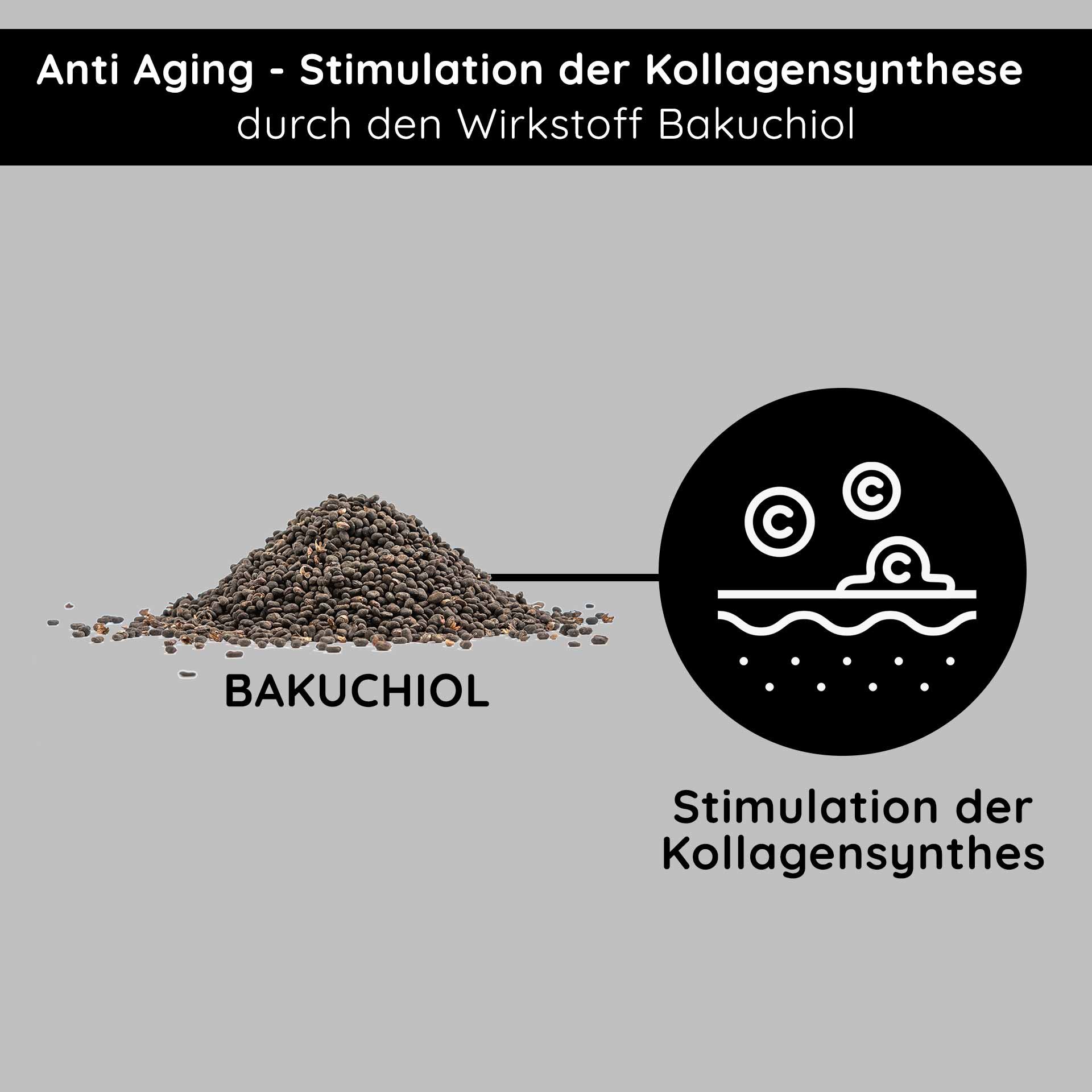
Retinol vs. Bakuchiol — was ist besser?

Retinol ist der klinisch am besten belegte Anti-Aging-Wirkstoff. Bakuchiol wirkt ähnlich, ist pflanzlich — ideal für Schwangere und sehr empfindliche Haut.